Semblance of Fern
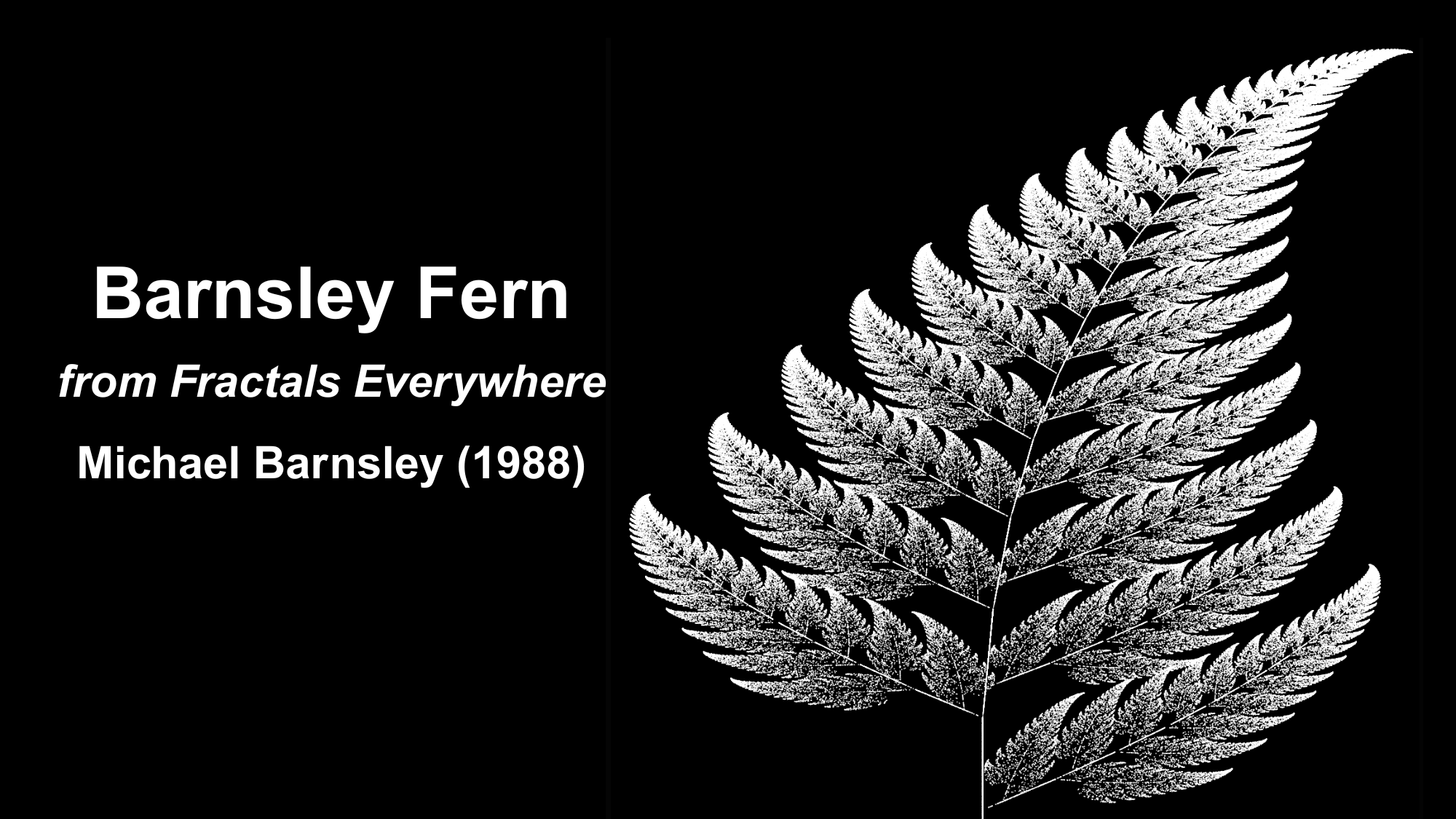
Semblance of Fern (2025) is an electronic composition for four loudspeakers, commissioned by Experimental Sound Studio (ESS) for the Lincoln Park Conservatory in Chicago, Illinois. The piece is based on a famous algorithmic process originally designed to, over time, draw fern-like fractal structures. The Barnsley Fern, as it is called, is a process that uses a careful balance of randomness and pre-defined equations to draw a two-dimensional structure that looks uncannily like a fern; or, more accurately, like a fern made of an infinite number of ferns. In this work, we co-opt the algorithm’s outputs to guide a chaotic sound structure along a continuously-evolving trajectory. By applying the algorithm’s X and Y coordinate values to various parameters of an unstable sound structure, the piece uses the “fern-shaped” data to bring order and direction to an otherwise unruly and unpredictable set of sounds. Over time, stable structures emerge from a formless, chaotic fizz, only to later disintegrate back into their surroundings.
The piece explores the connections between Dr. Michael Barnsley’s relatively “perfect” algorithmic fern and the rich diversity of natural ferns: intricate spore patterns, fuzzy fiddleheads, tangled root systems. Out of these explorations, I began to imagine “mutant ferns”—and by carefully altering various aspects of Barnsley’s original fractal algorithm, I realized that it could generate fern-like images that suggest unfamiliar ecosystems and conditions, blurring the line between natural and invented growth.
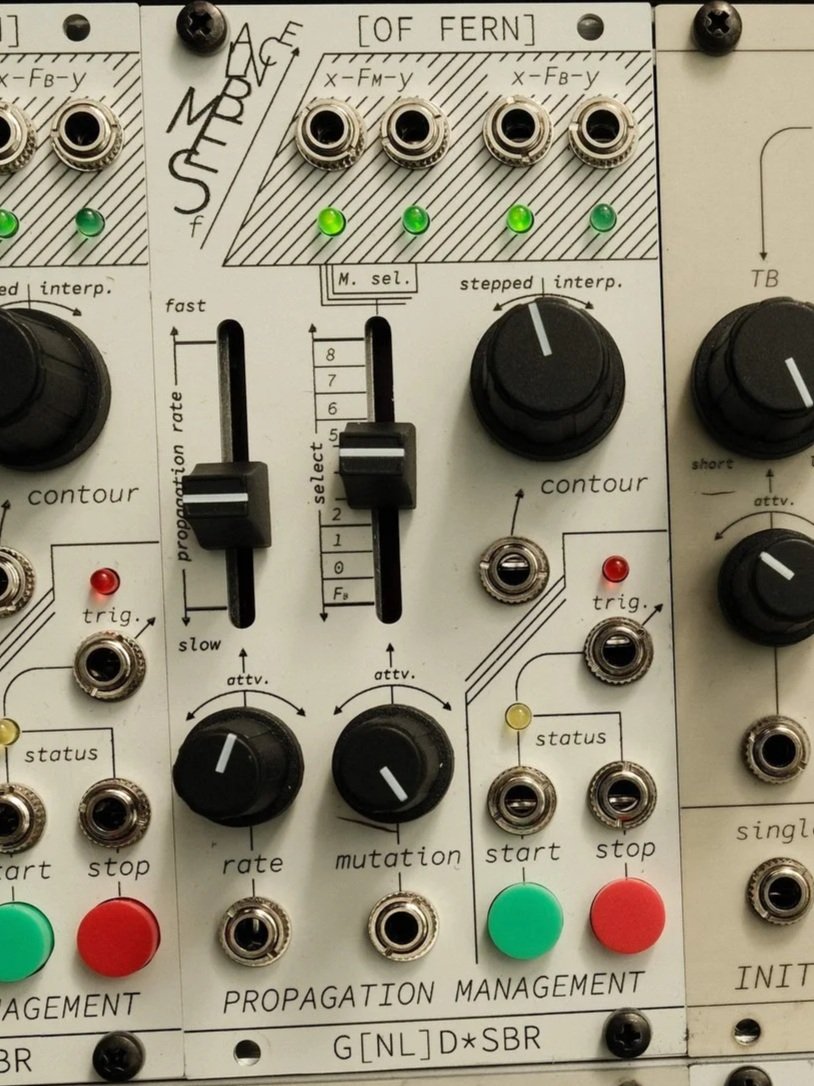
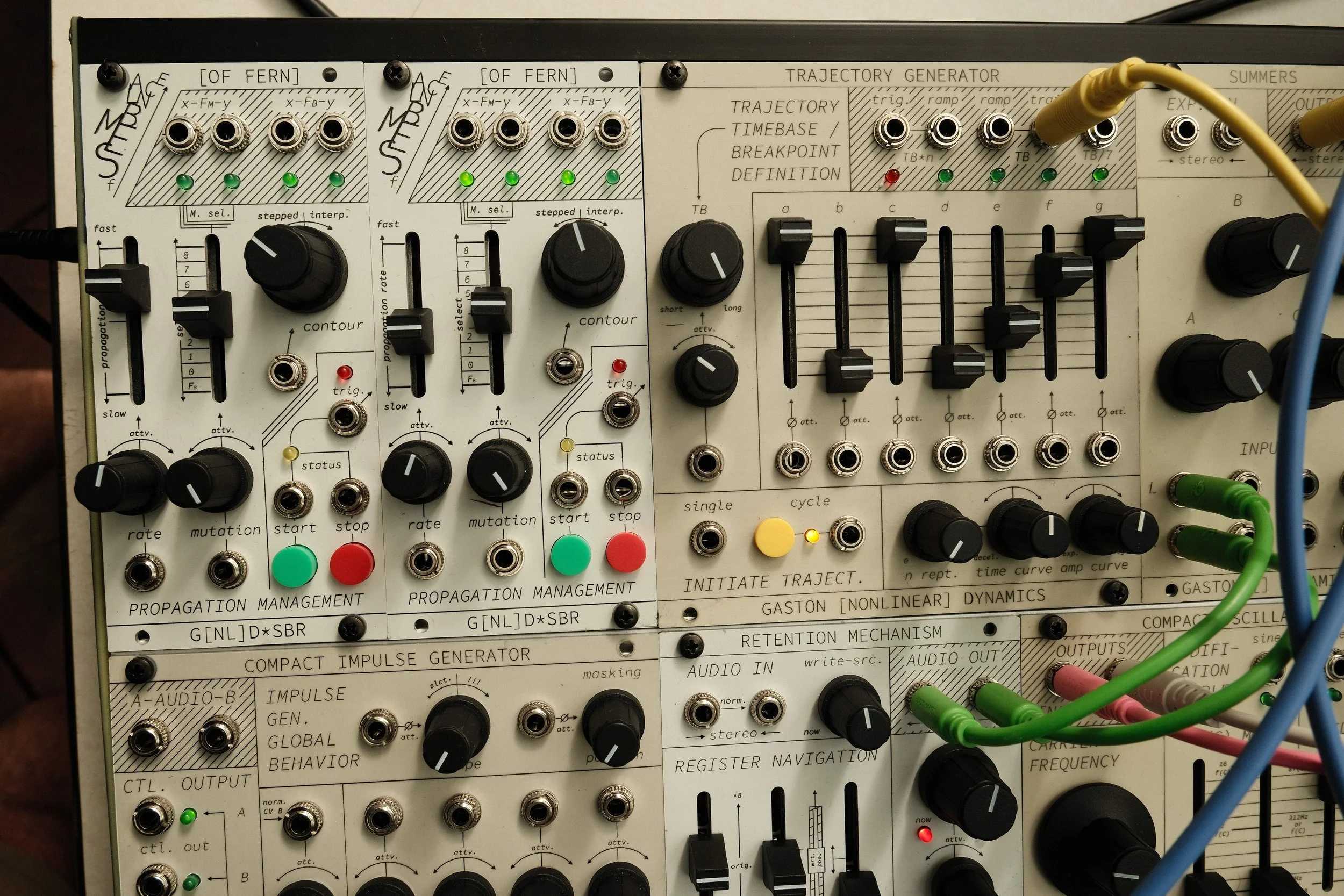
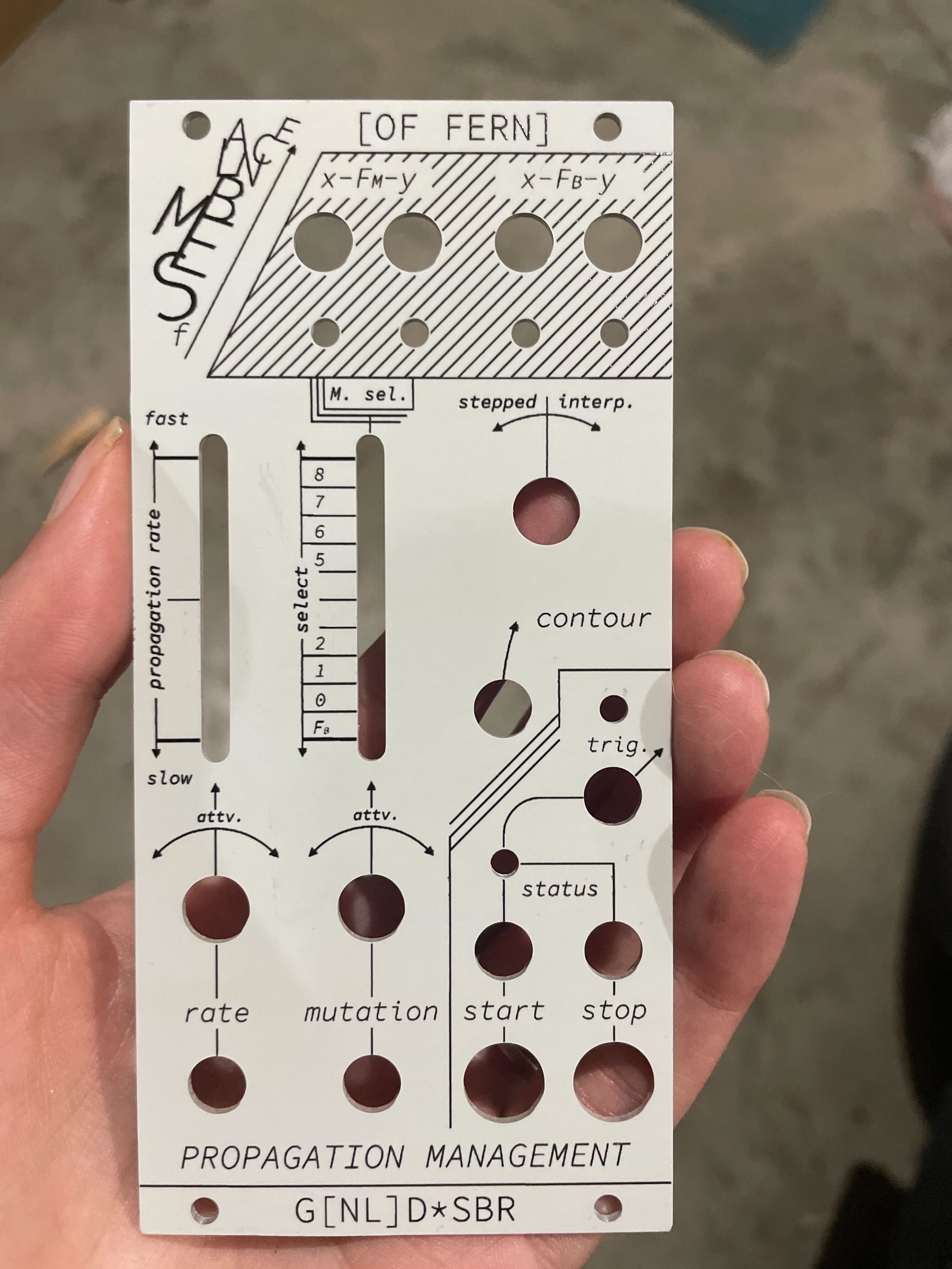
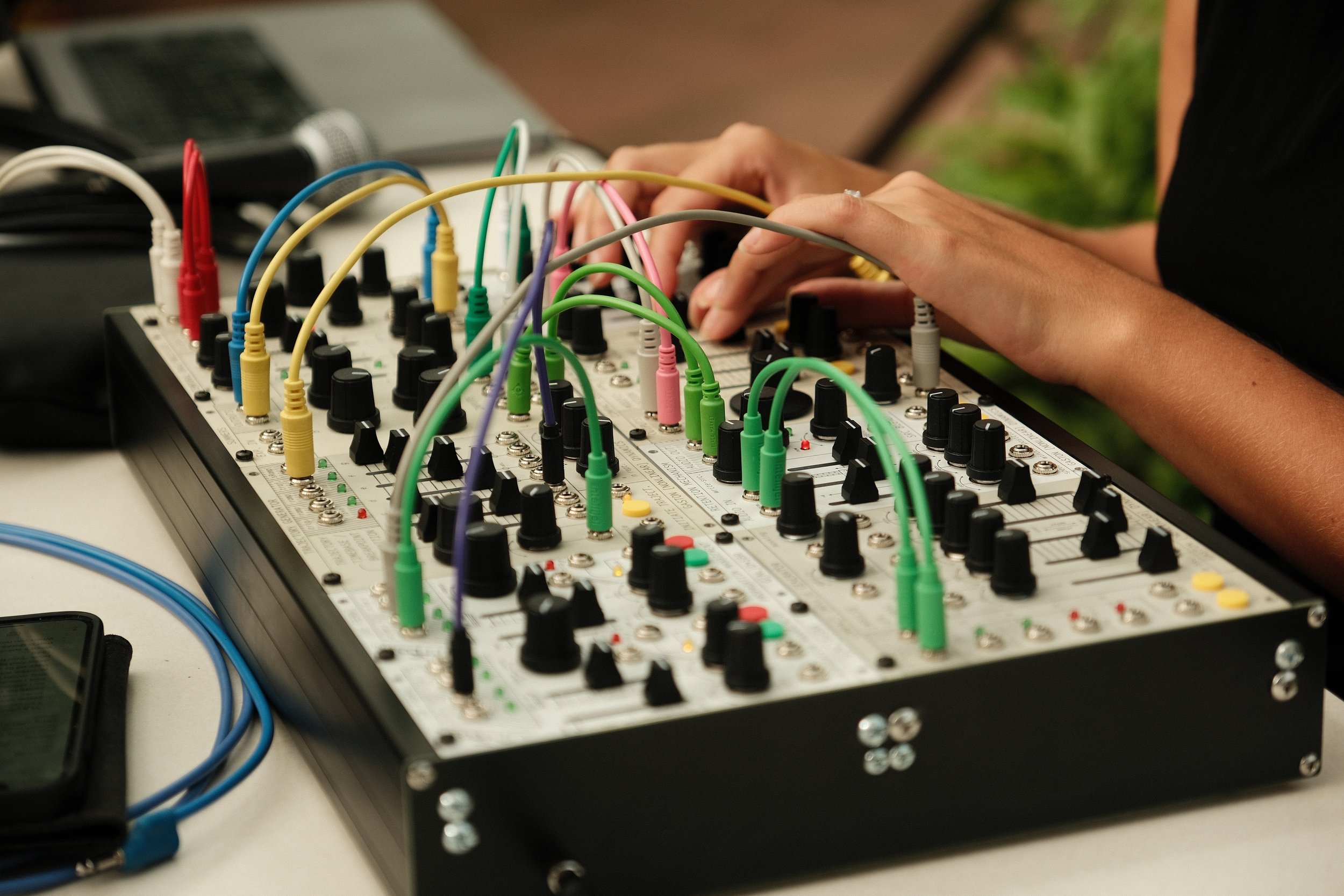
To realize this piece, I collaborated with musician and instrument designer Ryan Gaston to build a new electronic device (in Eurorack modular format). This device translates the Barnsley Fern and eight mutant variants into interwoven streams of control data, designed to interface with a digital modular synthesizer system of Gaston’s design.
The module offers parameters for propagation speed, smoothing, and “mutant” algorithm selection. It produces fern-inspired voltages that animate and spatialize the sounds you hear, moving them through the quadraphonic field and imbuing them with a continual sense of dynamism and evolution—like organisms spreading and intertwining. In the realization of the piece, multiple simultaneous, self-sustaining virtual ferns interact with one another, altering one another’s rate of growth and state of mutation.
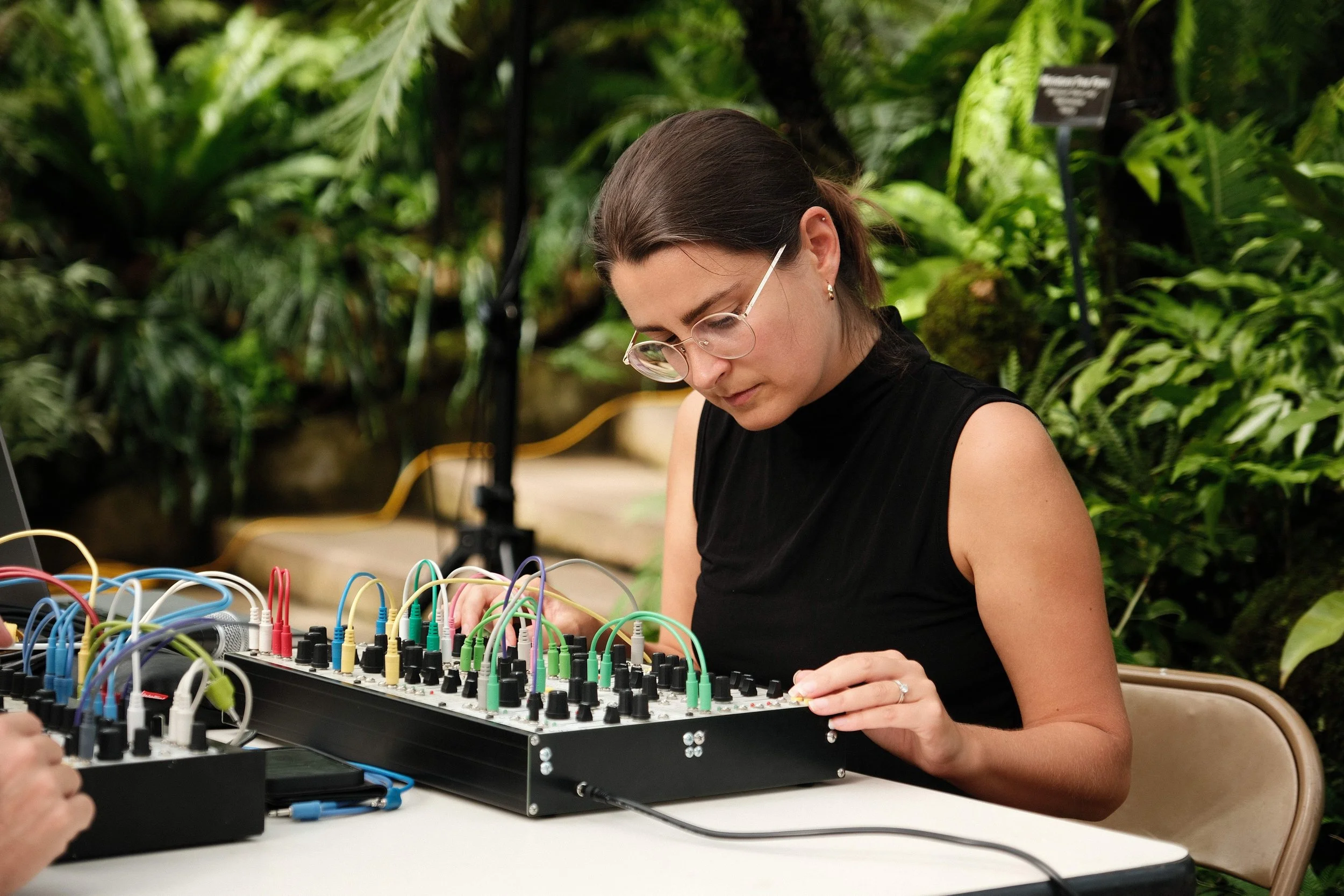
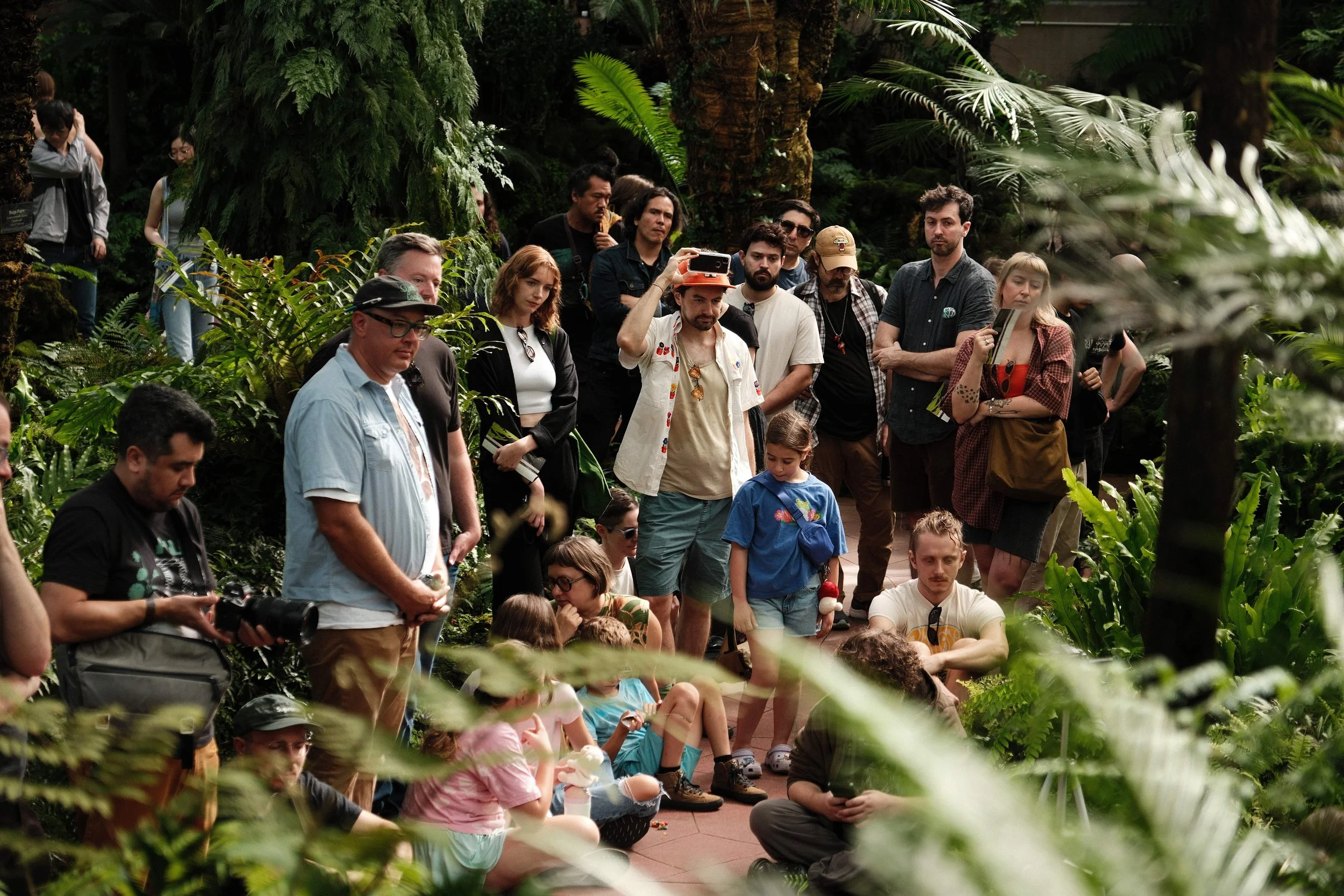
Likewise, the composition also incorporates environmental data collected from two places: the Lincoln Park Conservatory itself, and my childhood home in Ontario, where ferns grow across the ancient rock of the Canadian Shield. Temperature, air pressure, and humidity from both sites are integrated into the compositional process as an additional layer of modulation, linking the mathematical fern, the botanical ferns of the Conservatory, and the landscapes that shaped my earliest encounters with them.